
Industries
Industrial and warehouse cleaning in Redwood City and Menlo Park
Recurring cleaning for warehouse floors, loading docks, locker rooms, break rooms and plant offices in Redwood City and Menlo Park, timed around your shifts.
Printable checklist
Clean floors from the dock door to the front office
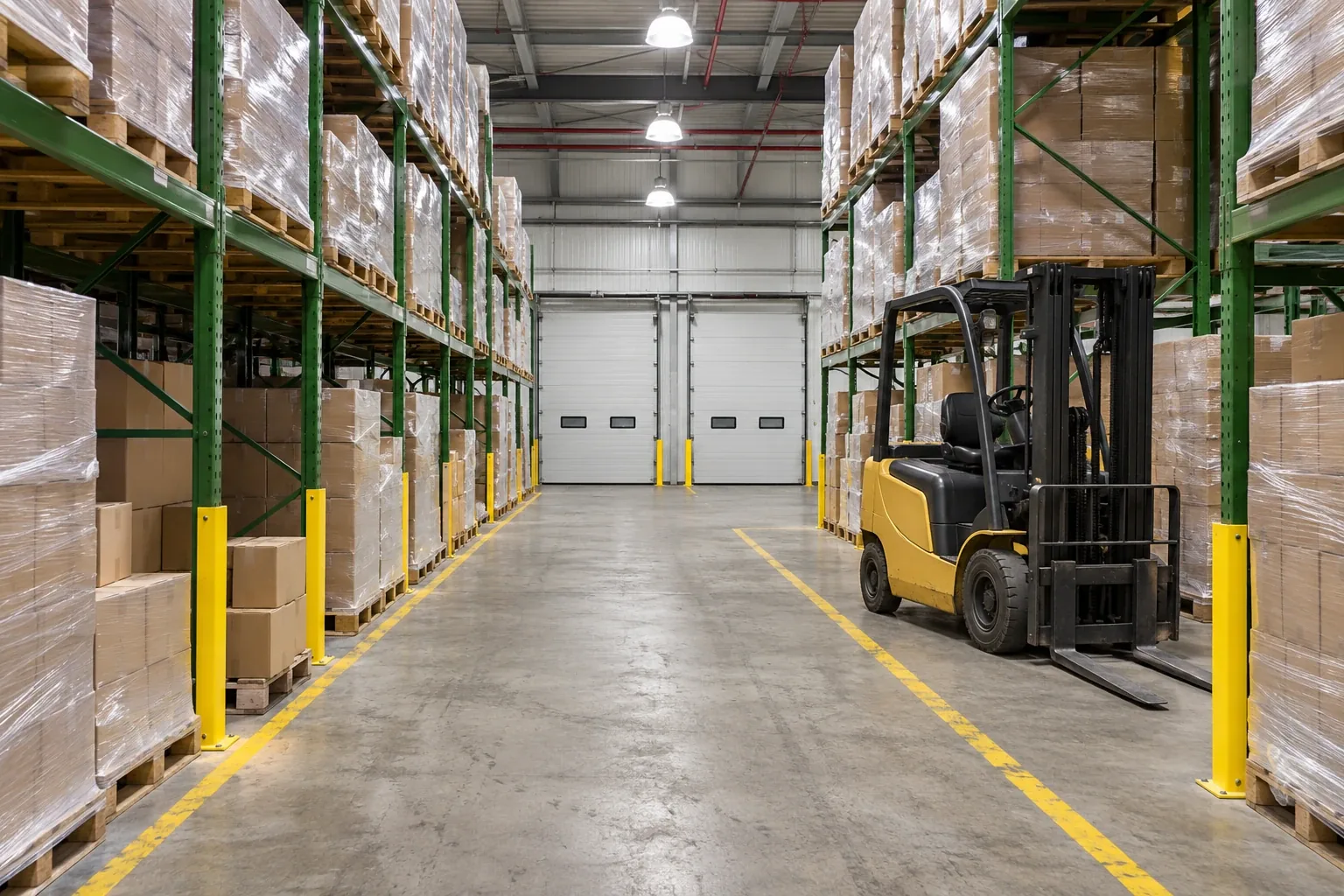
In a warehouse, dirt travels. Forklift tires carry grit from the dock apron down every aisle, pallet wrap and strapping collect in the corners, and the break room fills up with lunch traffic from each shift. Aeroso keeps the whole building in order, from the receiving bays to the offices at the front, so your crew works in a space that feels looked after.
Visits are timed around your operation. A single-shift distribution building is usually cleaned in the evening once the last trailer pulls out, while a site that runs late gets its visit in the quiet window between crews or on a weekend. Plant floors get regular sweeping and scrubbing, and periodic work through our commercial floor care service keeps concrete and VCT looking even from wall to wall.
Industrial buildings near the water
Much of Redwood City’s industrial activity grew up around the water. Redwood City’s working waterfront still moves bulk cargo such as construction aggregates. The land around it is lined with yards, warehouses and service buildings rather than office towers.
Menlo Park has a similar district near the Bay. Its former industrial area now mixes offices, life-science buildings and light manufacturing. Buildings there often put an assembly or production floor, offices and a shipping room under one roof.
Both settings share a common problem: fine dust. Truck traffic and aggregate yards near the shoreline put grit in the air, and it lands on window ledges, lockers and lunch tables as readily as on the floor. Regular dusting of reachable surfaces stops it from building up between visits.
What a warehouse visit covers
The route moves from the front of the building to the back. Offices and the reception counter get the care any workplace would: clear desks wiped, waste emptied, carpet vacuumed and hard floors mopped. Restrooms and locker rooms are cleaned fixture by fixture and restocked from supplies we provide or the stock you keep on site, and the break room is reset with its counters wiped, sinks scrubbed and appliance doors cleaned, so each shift starts fresh.
Out on the floor, aisles and staging lanes are swept or machine scrubbed to suit the surface. Dock plates and the strip of floor inside each roll-up door get extra attention, because that is where outdoor grit comes in. Cardboard and trash go to the bins and balers your team points out.
Racks, pallets and stored goods stay exactly where they are. Cleaners work around equipment and marked safety zones, and any room your team keeps off limits stays off the route.
Floor scrubbing, high dusting and dock care
Large warehouse floors in Redwood City and Menlo Park are scrubbed by machine. Ride-on scrubbers cover the wide main aisles and staging lanes in a single pass, and walk-behind units reach the narrower rows, the corners by the racking and the floor around the dock plates. Tire marks, spilled product and tracked-in grit come up together, and the floor dries quickly behind the machine. Deeper work on worn concrete and VCT comes through our commercial floor care.
Overhead, dust settles on rafters, beams, the tops of racking, ductwork and light fixtures, then drifts back down onto stock and workstations. High dusting from a lift clears those surfaces on a periodic schedule, booked for a quiet shift with the stock below covered or the aisle cleared first.
Docks and loading areas take the hardest beating, so they get their own attention:
- Dock plates, levelers and the floor inside each door swept and scrubbed
- Loading-area debris, strapping and pallet wrap cleared
- Dock offices and shipping counters wiped down
- Walk-off mats at dock entries vacuumed or shaken out
- Restrooms and break rooms near the docks cleaned and restocked
Shifts, walkways and site access
Industrial sites run on rules, and good cleaning fits within them. Before the first visit we walk the building with you to learn the forklift paths, pedestrian walkways, doors that stay locked and any areas that need an escort. Those details go onto the checklist, so every visit follows them.
Your site’s own safety requirements set the ground rules on the floor, from high-visibility vests to the hours when equipment is parked. Cleaning is booked for the stretches when the floor is quiet, which keeps cleaners and machinery out of each other’s way.
If the building has just finished a tenant improvement or a new mezzanine, our post-construction cleaning clears the construction dust before recurring care begins.
One plan for the office, the floor and the dock
An industrial building here can hold more than one kind of space. A biotech manufacturing suite might share its address with offices and a shipping room, and a warehouse might sit behind a showroom. One plan covers every part, with each area on its own rhythm: offices nightly, the warehouse floor weekly and the docks more often when deliveries pick up.
Controlled rooms inside these buildings follow the facility’s written procedures through our cleanroom and laboratory cleaning, while offices, restrooms and break areas get recurring care from our Redwood City janitorial service.
What warehouse cleaning costs in Redwood City and Menlo Park
Recurring warehouse and light industrial cleaning on the Peninsula usually falls between $0.10 and $0.22 per square foot of cleanable area each month as of 2026. Storage buildings that need only a weekly visit start near $0.07, and busy sites with several shifts, heavy dust and long lists of restrooms and break rooms reach about $0.38.
Here is one example: a 40,000-square-foot distribution building in Redwood City, with front offices, two restroom blocks and a break room cleaned five nights a week and the warehouse floor scrubbed weekly. At $0.12 a square foot, that comes to about $4,800 a month.
Several things move the number. Pricing follows the area that actually gets cleaned, so racked storage often sits outside the count. More shifts, more restrooms and locker rooms, heavy dust from nearby yards and high dusting that needs a lift all add time, while large open floors suited to ride-on scrubbers bring the rate down. A walkthrough of your building settles the final figure.
Book a free warehouse walkthrough and show us the dock lanes, forklift routes and shift times that floor and support-room cleaning must fit around.
Common questions
How often do busy warehouse aisles need machine scrubbing?
Busy distribution floors do well with machine scrubbing once a week, with sweeping in between. A storage building with light traffic stays in good shape with scrubbing once or twice a month.
Can cleaning happen between production shifts?
Yes. Visits are set for the quiet window between crews, after the last shift or on weekends, so cleaners never compete with forklifts or loading.
Which parts of an industrial building get cleaned on a recurring visit?
Offices, restrooms, locker rooms, break rooms, entries, aisles and dock areas. Pallets and stored goods are worked around and left as they are.
Can you clean rafters, racking tops and light fixtures in a warehouse?
Yes. High dusting from a lift reaches rafters, beams, ductwork, racking tops and lights, and it is scheduled for a quiet shift with the stock below protected.
Is warehouse cleaning priced on total square footage?
It is priced on cleanable area. Racked storage that never needs sweeping often sits outside the count, which keeps the monthly figure tied to the real work.
What should we share before the first warehouse visit?
Shift times, forklift paths, pedestrian walkways, locked or escorted areas and where cardboard and trash should go. Those details shape the route.
Industries